

Most businesses don’t plan to outgrow their consent process. It just happens quietly, one new channel or one new regulation at a time. Here are five clear signs it’s time to move to a dedicated consent management platform, before a gap turns into a fine.
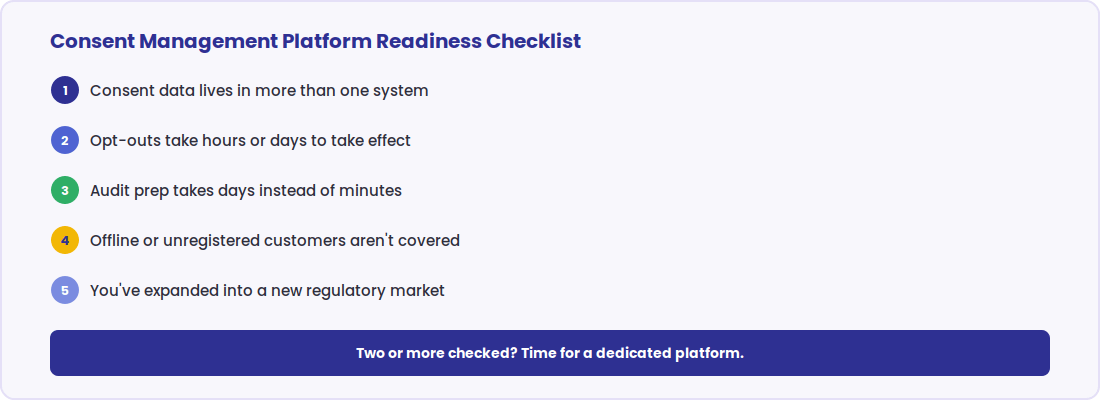
💡 Quick take: If you recognize two or more of these signs, a spreadsheet or generic tool is no longer the right foundation for your consent process.
🚩 5 Signs You Need a Dedicated Consent Management Platform
🧭 What Happens If You Wait
None of these signs cause problems on their own, right away. They build up quietly instead. Then a regulator asks a specific question, or a customer complaint escalates, and the gaps surface all at once, under pressure rather than on your own timeline.
Fixing this proactively is far less disruptive than fixing it during an active audit or investigation.
✅ Moving to a Dedicated Consent Management Platform
Consentry was built to close exactly these gaps — one system, every channel, always audit-ready. For a closer look at how this reduces exposure over time, see our post on how consent management reduces regulatory risk.
Recognize two or more of these signs? It’s time for a proper platform.
❓ Frequently Asked Questions
Recognizing the Signs
How many of these signs mean it’s time to switch platforms?
Even one sign is worth addressing, but two or more together usually means the underlying system, not just a single process, needs to change.
Is a spreadsheet ever good enough for consent tracking?
Only at very small scale, with a single channel and no regulatory scrutiny. Once a business adds channels, markets, or customer volume, spreadsheets fail to stay accurate or auditable.
Does entering a new country always require a new consent process?
Not a new process from scratch, but usually new configuration. A dedicated platform should let you add a market’s specific rules without rebuilding your entire consent system.
Making the Move
How long does it take to implement a dedicated consent management platform?
Timelines vary by system complexity, but a platform designed for fast integration typically deploys in weeks rather than months, especially when existing consent records can be imported directly.
What should a business look for when evaluating options?
Prioritize multi-channel capture, real-time sync with core systems, and audit-ready reporting. These three capabilities address most of the signs covered above at once.